A Common Problem in British Homes
If you live in a period property or an older home with original single-glazed sash windows, chances are you’ve had secondary glazing installed at some point — that extra pane of glass fitted on the inside to improve insulation and reduce draughts.
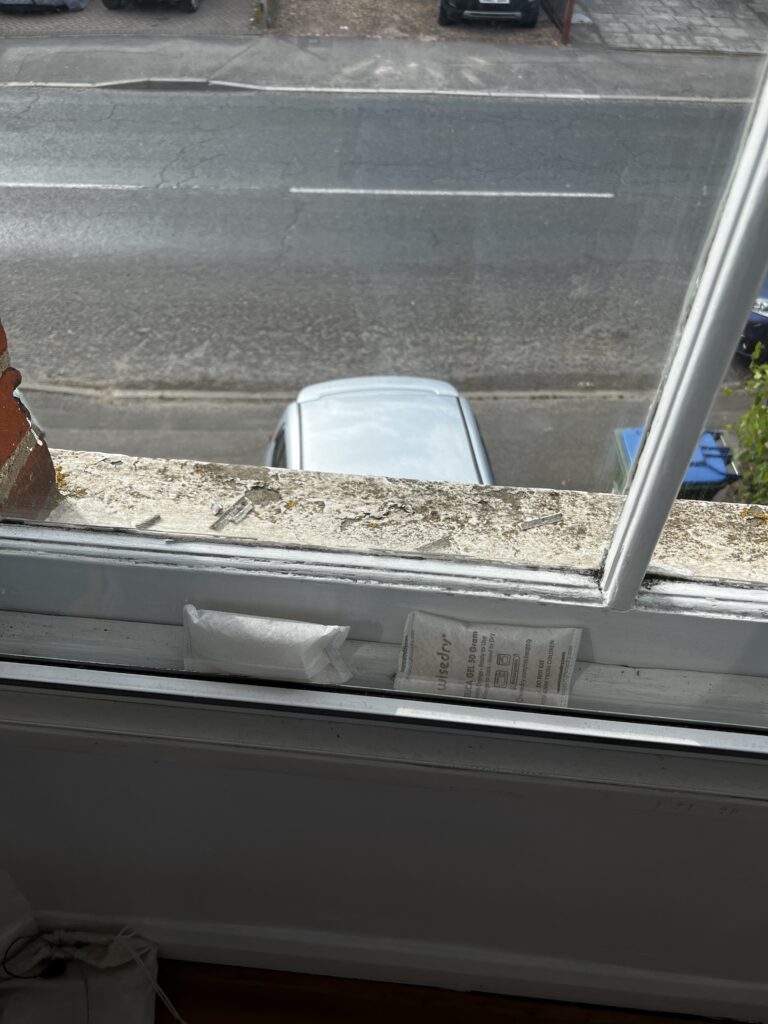
The concept shows promise in theory but condensation keeps appearing between the secondary glazing and the original window which damages the system’s performance.

You wipe it away, you leave vents open, you try running a dehumidifier — yet the misty droplets return the moment temperatures drop.
The reason?
The air trapped between the two panes becomes a little microclimate of moisture, and once that water has nowhere to go, it condenses on the coldest surface — usually the inside of your single glazing.
An easy method exists to fix this problem, but professional services need to be hired for permanent condensation removal.
The Quick Life Hack: Moisture Absorption Strips
The following method will help you stop condensation between glazing layers at a price that equals takeaway pizza.
What You’ll Need
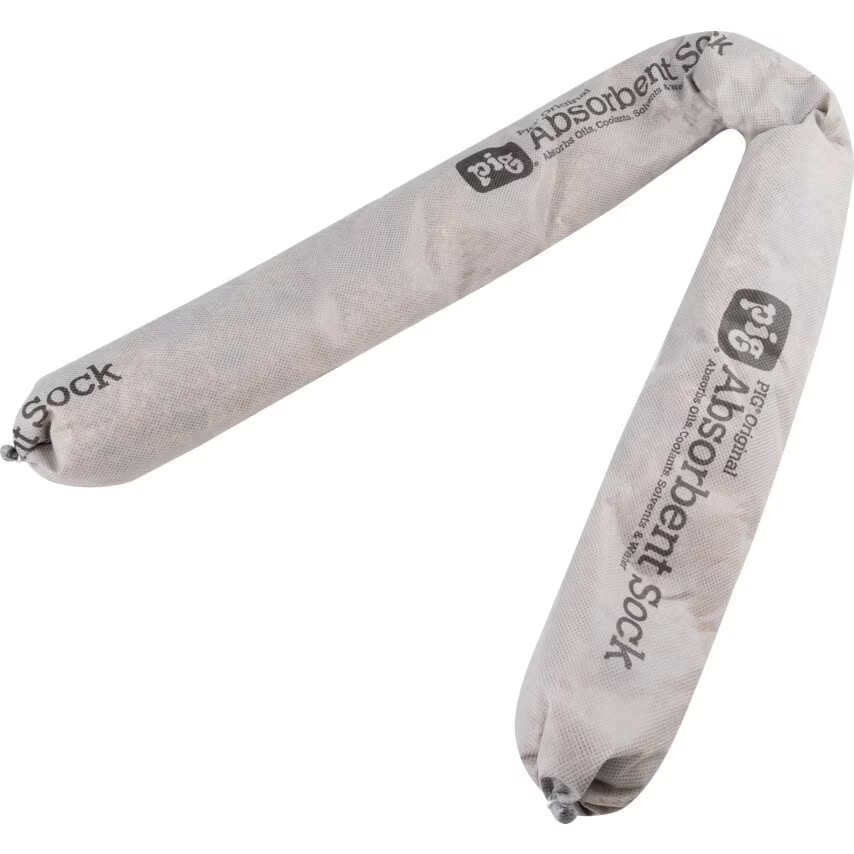
- Moisture absorption strips or desiccant packs (often sold for caravans, wardrobes or window sills)
- A clean cloth
- A small screwdriver (if your secondary glazing opens or lifts out)
How It Works
The moisture absorption strips function through desiccant crystals which usually contain silica gel to extract and store airborne moisture.
By placing a few strips inside the cavity between your single glazing and the secondary panel, you’re actively drying the air gap where condensation usually forms.
The moisture in the air gets absorbed which reduces the amount of vapour that can condense on the cold glass surface. In short, you balance the humidity, and the mist disappears.
How to Fit Them
- Open or carefully remove the secondary glazing panel (if it’s the clip-out or lift-out type).
- You need to clean both glass surfaces completely to remove any moisture that might be trapped inside.
- Place the moisture absorption strip along the bottom frame edge, or discretely in a corner where air can circulate but visibility is minimal.
- Replace or close the secondary glazing securely.
The condensation levels will decrease after 24 hours of applying the treatment. In particularly damp homes, replacing the strips every few months keeps them effective.
But Here’s the Catch
The moisture absorption strips function as a temporary solution because they deal with the symptoms while leaving the root cause unaddressed.
The main reason condensation develops is because single-glazed windows fail to provide proper thermal insulation. The air gap between it and your secondary glazing isn’t sealed or insulated properly — so every cold night, warm indoor air cools, releases moisture, and fogs up your view again.
The physical laws stand against you in your effort to defeat them.
The Permanent Fix: Retrofit with VIG (Vacuum Insulating Glass)
Scott James Windows has encountered numerous homebuyers who desire to maintain their original windows yet find themselves bothered by ongoing condensation problems and air leaks and the appearance of secondary glazing.
A permanent solution requires removing secondary glazing to install Vacuum Insulating Glazing (VIG) into existing single-glazed sash or casement windows.
What Is VIG?
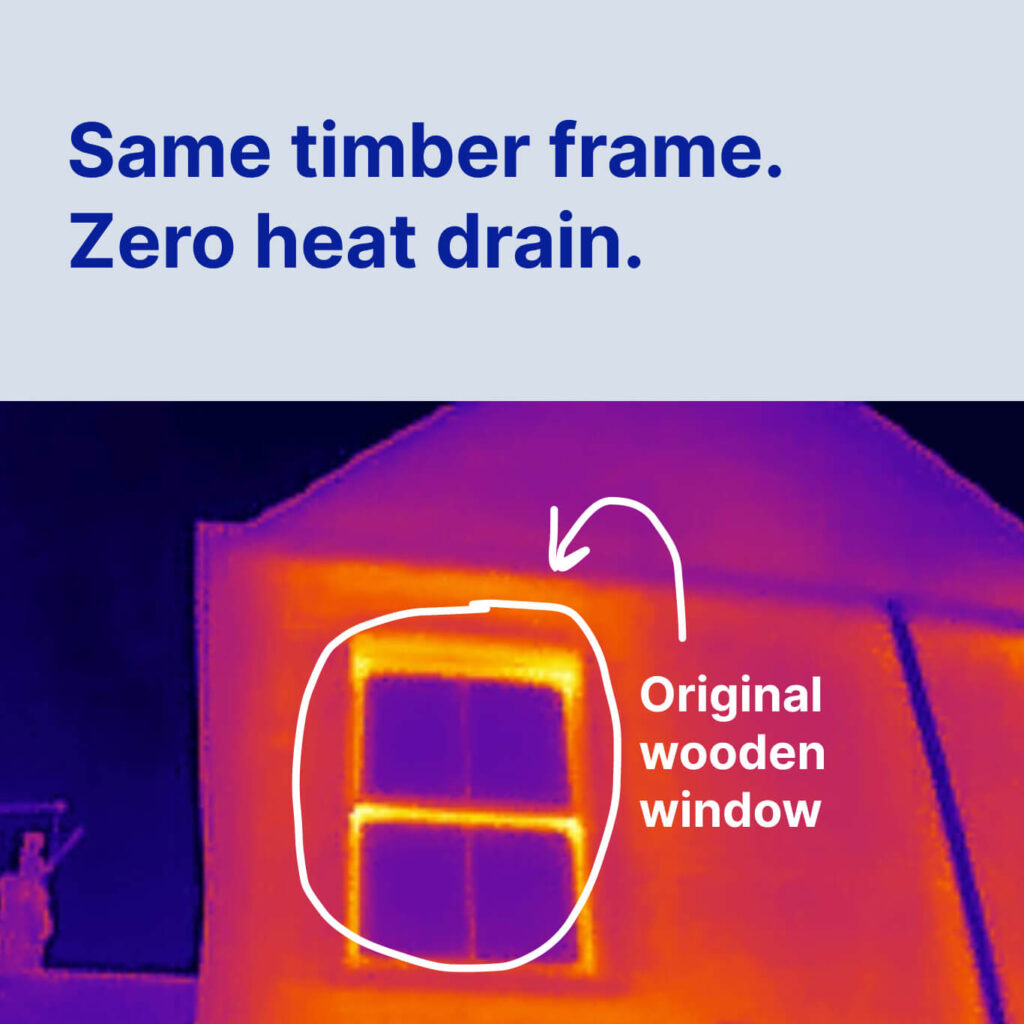
VIG is a breakthrough technology that delivers the performance of modern double or triple glazing in a unit only slightly thicker than single glass.
- The two glass sheets maintain a 0.1 mm vacuum space between them which remains almost invisible to the naked eye.
- Because it’s a vacuum, there’s no air or gas to carry heat or moisture — so no condensation can form inside the unit.
- The edges are sealed using durable, high-temperature materials (not the butyl sealants that soften or “melt” in ordinary double glazing).
Why VIG Solves the Condensation Problem Completely
With VIG, you have:
- No secondary glazing cavity — the old condensation gap simply doesn’t exist.
- No moisture build-up, because the vacuum space cannot hold water vapour.
- Superior insulation, keeping the inner pane warm and the dew point well above indoor humidity levels.
- Original frames retained, preserving heritage aesthetics.
The result? Crystal-clear windows all year round, better thermal comfort, and no need to keep swapping out desiccant strips.
The Benefits of a Retrofit Instead of Replacement
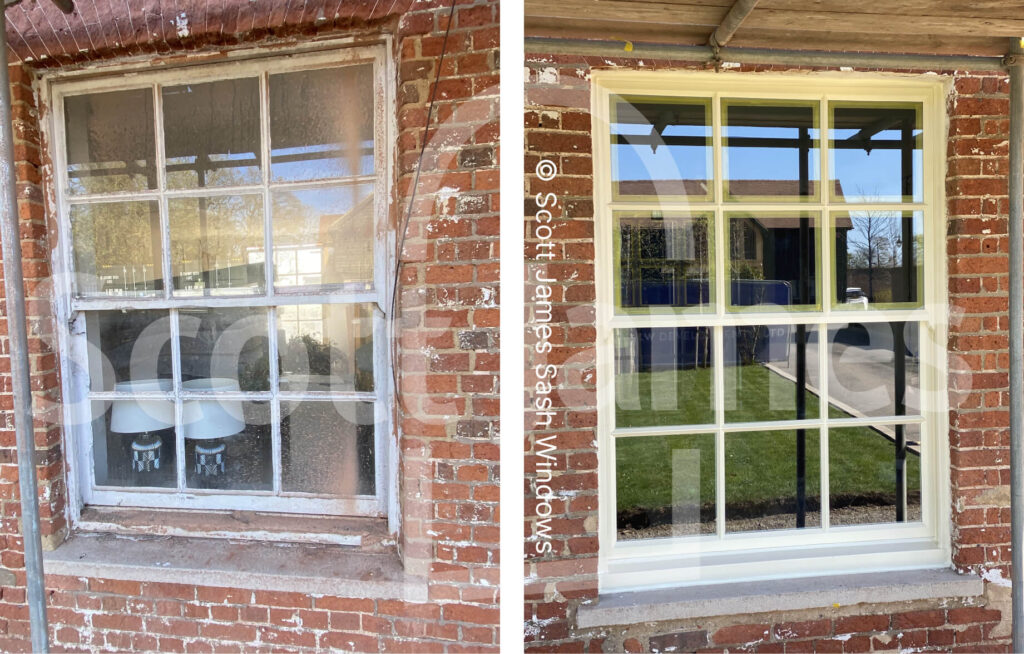
One of the best aspects of retrofitting VIG units is that you can keep your existing timber frames, avoiding the upheaval and cost of full window replacement.
Scott James Windows’ retrofit process involves:
- The assessment requires you to examine your current window sashes or casements for any signs of structural damage.
- The process needs the complete removal of the original single glass unit.
- The new VIG units must fit into the existing rebate because they need to be precision-made for correct installation.
- The process finishes with seals that remain hidden from view and paint touch-ups which maintain a professional appearance.
The historic charm remains intact while the building achieves modern energy efficiency standards through its complete transformation.
Consequences of Sealant Failure
- Reduced thermal performance — the insulating gas escapes, and moisture can infiltrate
- The space between the panes starts to fog up when moisture gets inside the cavity
- Permanent damage — a failing unit can rarely be reliably resealed externally
- The only option for fixing this problem requires full IGU replacement because seal repairs prove ineffective in most situations
- Loss of warranty — seal failure often voids or triggers warranty replacement clauses
For a manufacturer or installer, such failures are serious liabilities — they reflect on quality control, material specification, and long-term durability.
Life Hack vs. Long-Term Value
Let’s be honest: moisture absorption strips are cheap, simple and effective for the short term. These products will help you stay warm during winter while reducing your need to clean windows every day.
The VIG retrofit represents a better choice for homeowners who want to achieve permanent benefits from improved warmth and noise reduction and condensation prevention.
The process leads to a shift from basic repairs to total organizational transformation.
| Life Hack | Retrofit Solution |
| Absorbs moisture temporarily | Eliminates moisture completely |
| Needs replacing every few months | Maintenance-free for decades |
| No energy efficiency gain | Massive improvement in U-value and comfort |
| Still leaves bulky secondary glazing | Restores the clean look of original windows |
The Scott James Windows Difference
Our team specialises in heritage window retrofits through the use of advanced glazing systems which include VIG technology.
The design process creates custom solutions which maintain structural integrity while incorporating modern technology into historic buildings.
Vacuum-insulated glazing provides these advantages to customers who choose it for their windows:
- The system operates to stop condensation from ever forming.
- The system provides improved thermal comfort to users of the building.
- The system operates at a level which reduces heating costs for users.
- The system operates at a level which maintains the original window appearance.
Our team provides complete assistance for the entire process from survey to installation while protecting all existing frames and sash components.
In Summary
British period homes commonly experience condensation problems at the space between secondary and single glazing. The life hack of adding moisture absorption strips provides an affordable and effective solution for this issue which functions as an immediate fix that actually works.
The VIG unit retrofit of existing single glazing will provide you with a long-lasting solution which eliminates the fundamental problem.
The windows deliver a flawless appearance which matches traditional double glazing while offering perfect efficiency through the absence of moisture gaps and condensation and air presence.
Scott James Windows provides professional guidance to help you complete your upgrade while keeping your preferred appearance and delivering both visual clarity and comfort.
Read more articles
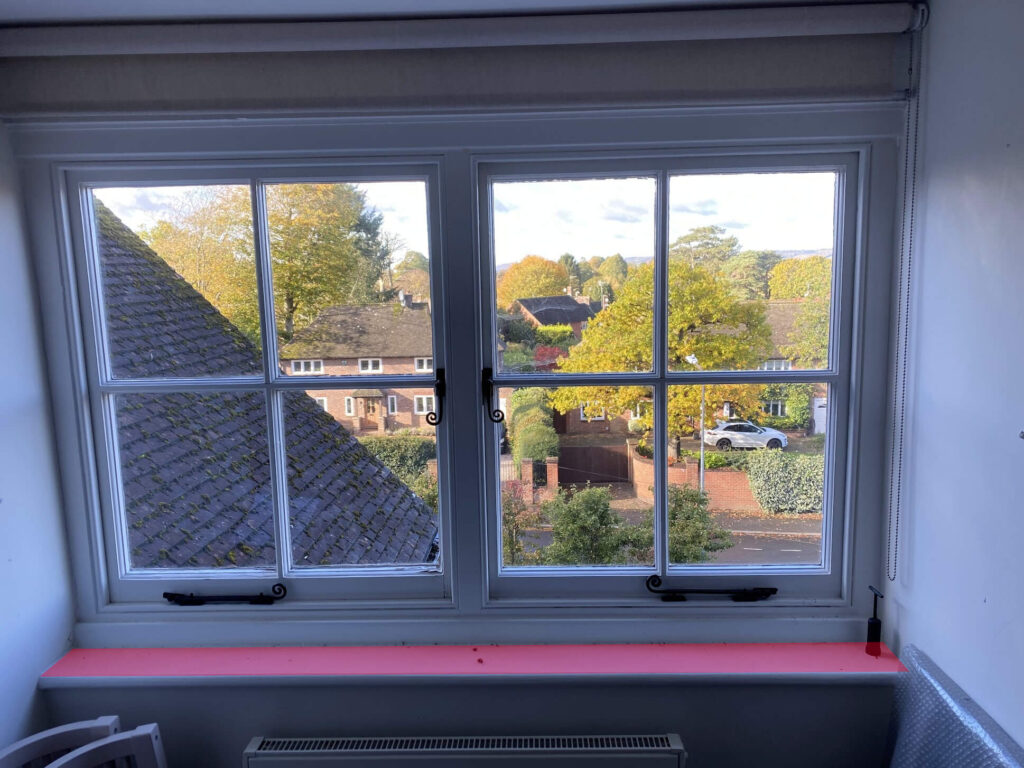

What if the gap behind the primary window is too narrow for secondary glazing?
What if the gap behind the primary window is too narrow for secondary glazing?
Finding the ideal curtains for sash windows
Finding the ideal curtains for sash windows
How to make old wood windows energy efficient
How to make old wood windows energy efficient