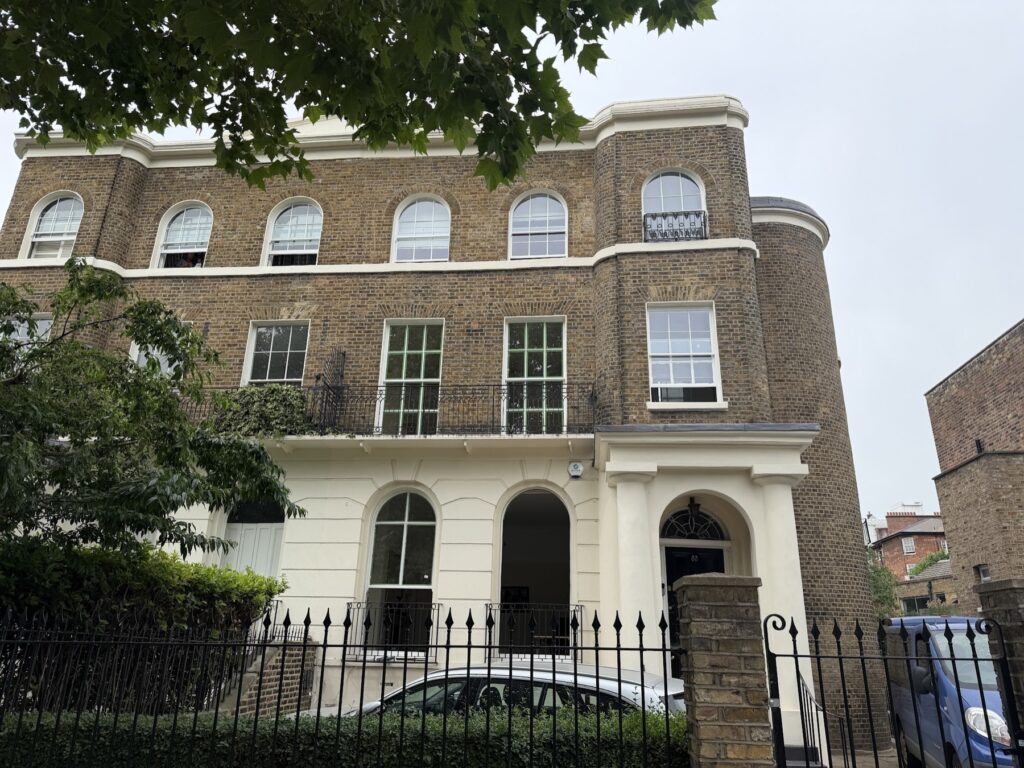
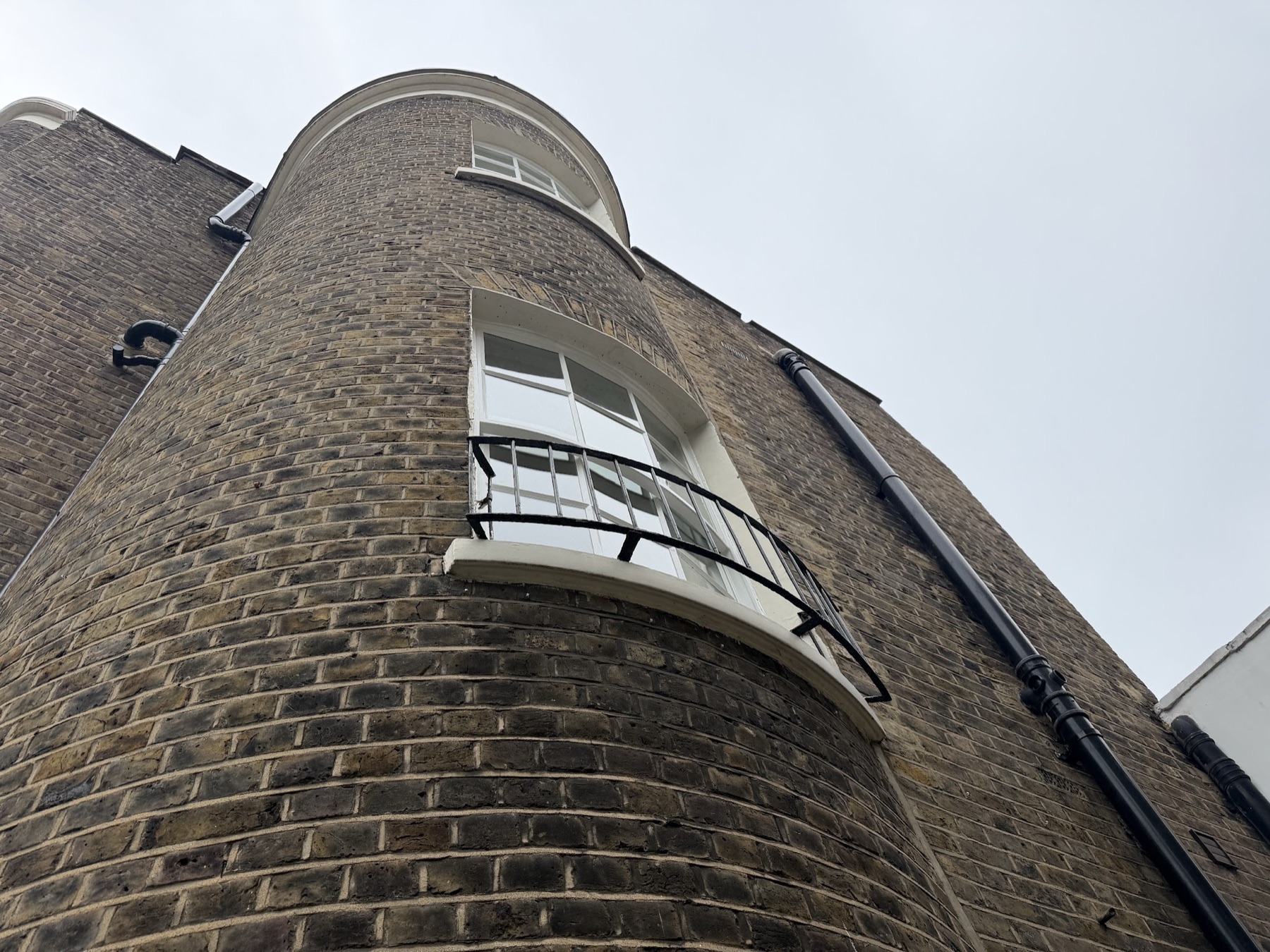
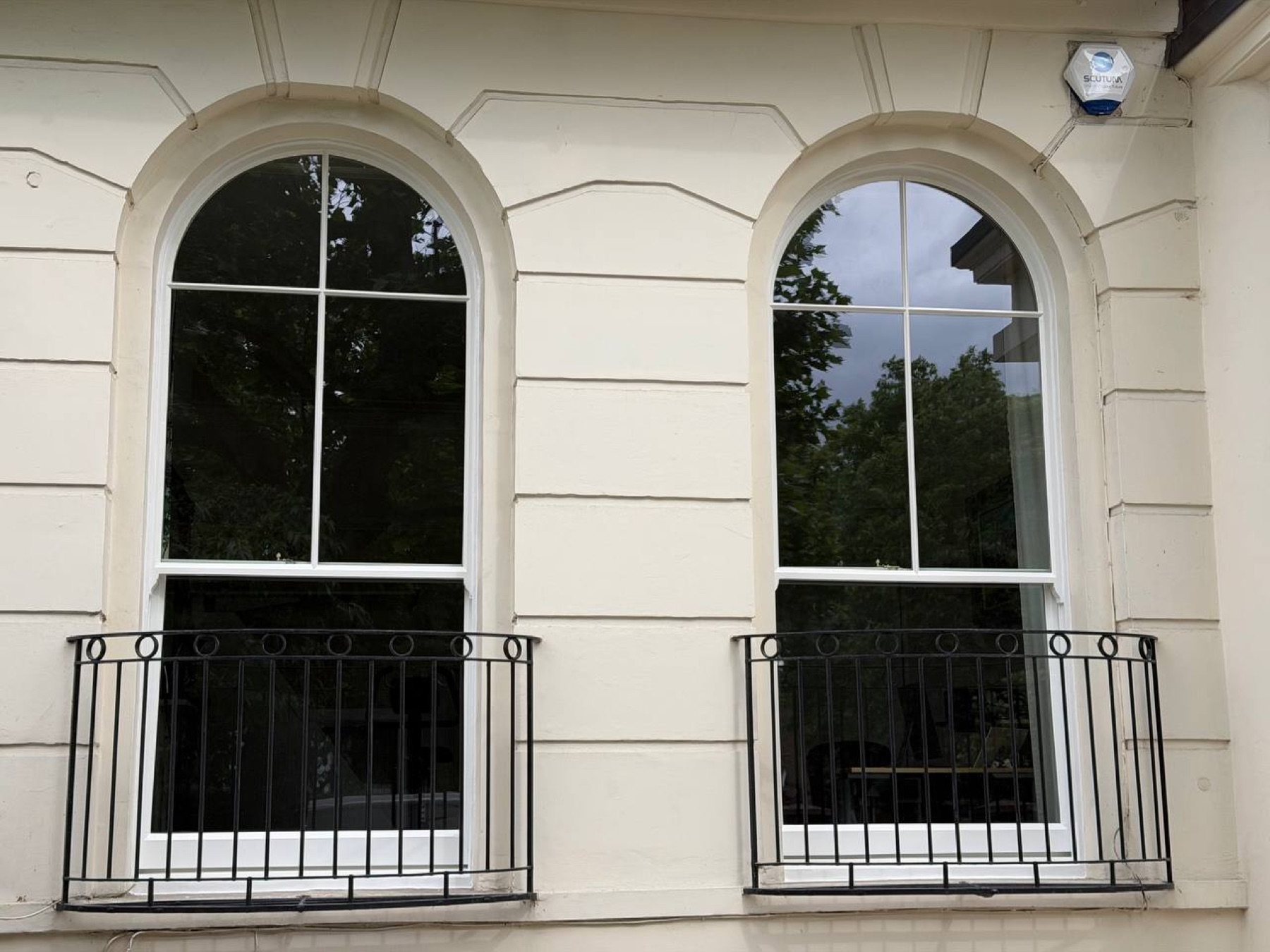
A Grade 2 listed brick and stucco villa in St John’s Wood, London NW8, with three kinds of window most reglazing firms turn away: round-headed arched sashes across the top floor and the stucco ground floor, and curved sashes set into the curved brick bay on the side.
All of it was single glazed.
We restored the timber and reglazed every opening with LandVac vacuum units, so the house reads exactly as it did from the street and holds its heat like a modern one.
The property and the brief
The villa is listed Grade 2, so nothing on the elevations could change.
The brief was to keep every sash, every glazing bar and every sightline, and to replace the single glazing with something that performs.
The owners and their architect handled the listed building consent; our part was the survey, the timber and the glass.
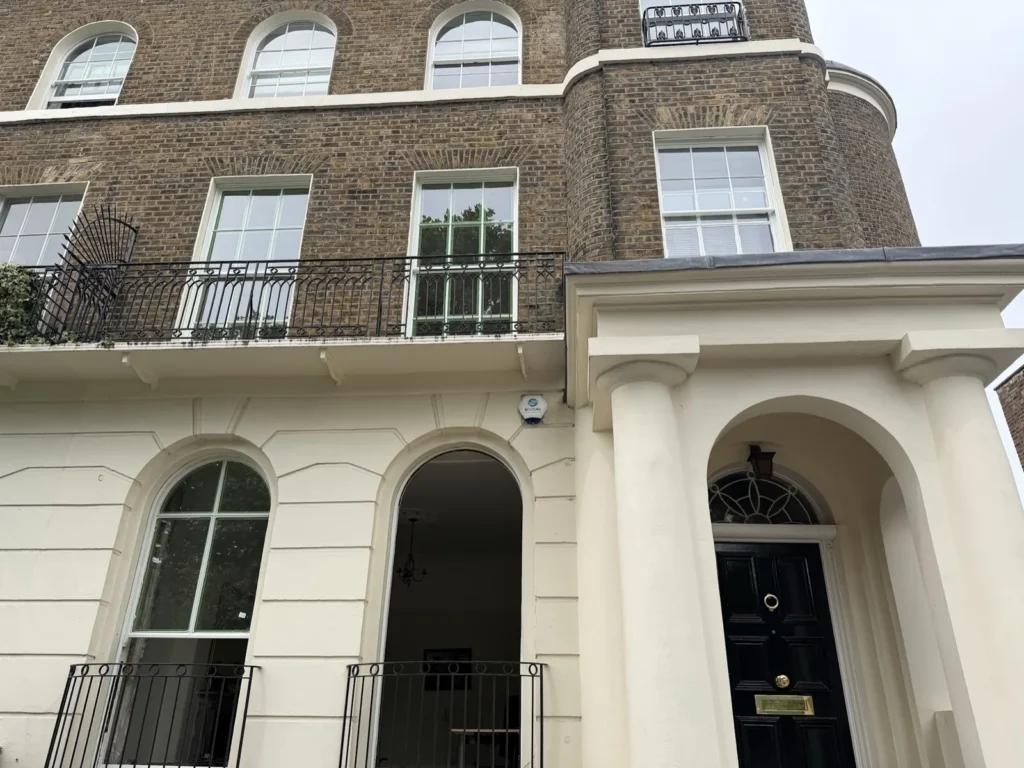
The openings are unusually varied for one house. Round-headed arched sashes run across the top floor and round the curved bay.
The first floor has tall rectangular sashes behind a cast-iron balcony.
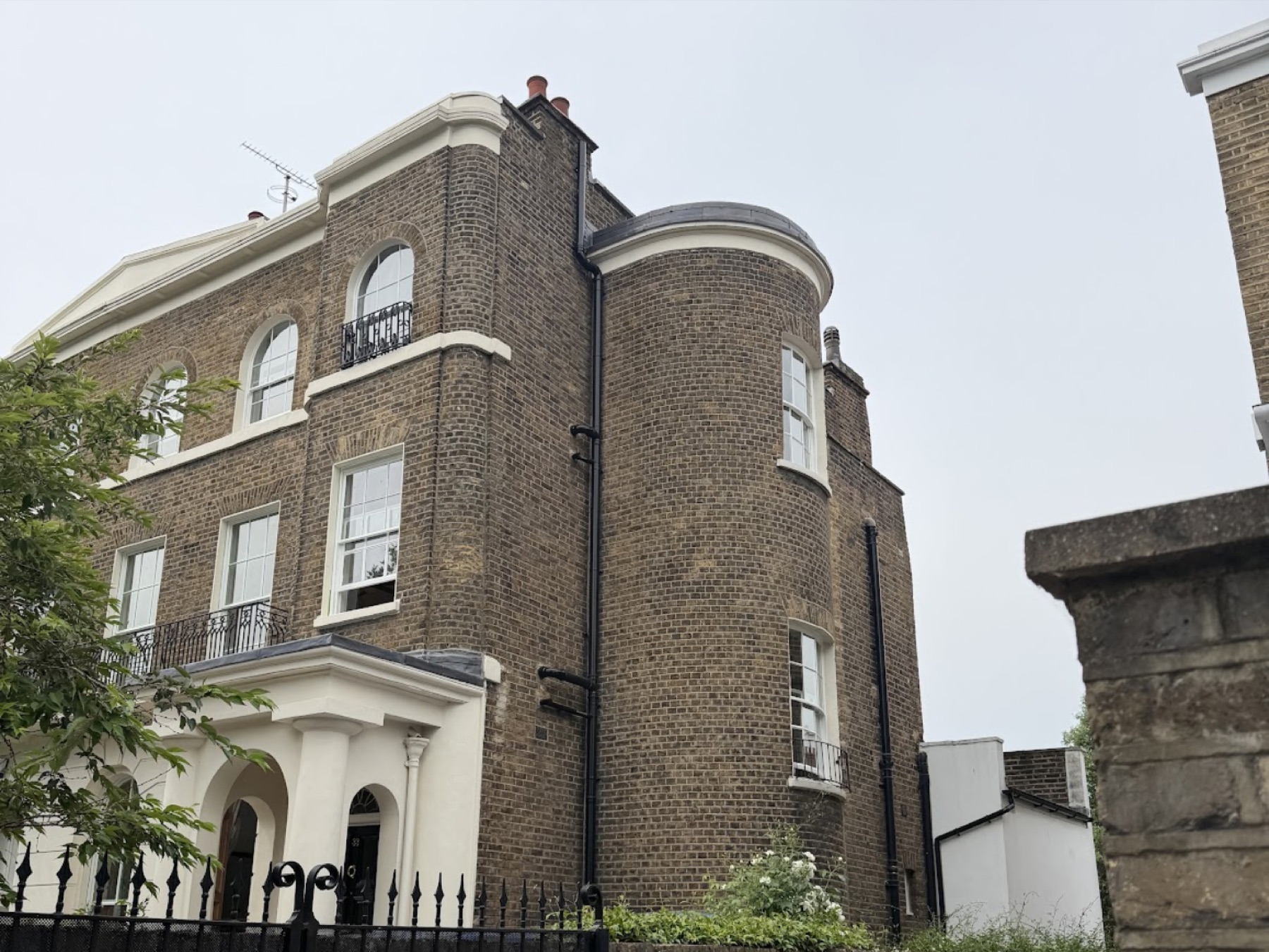
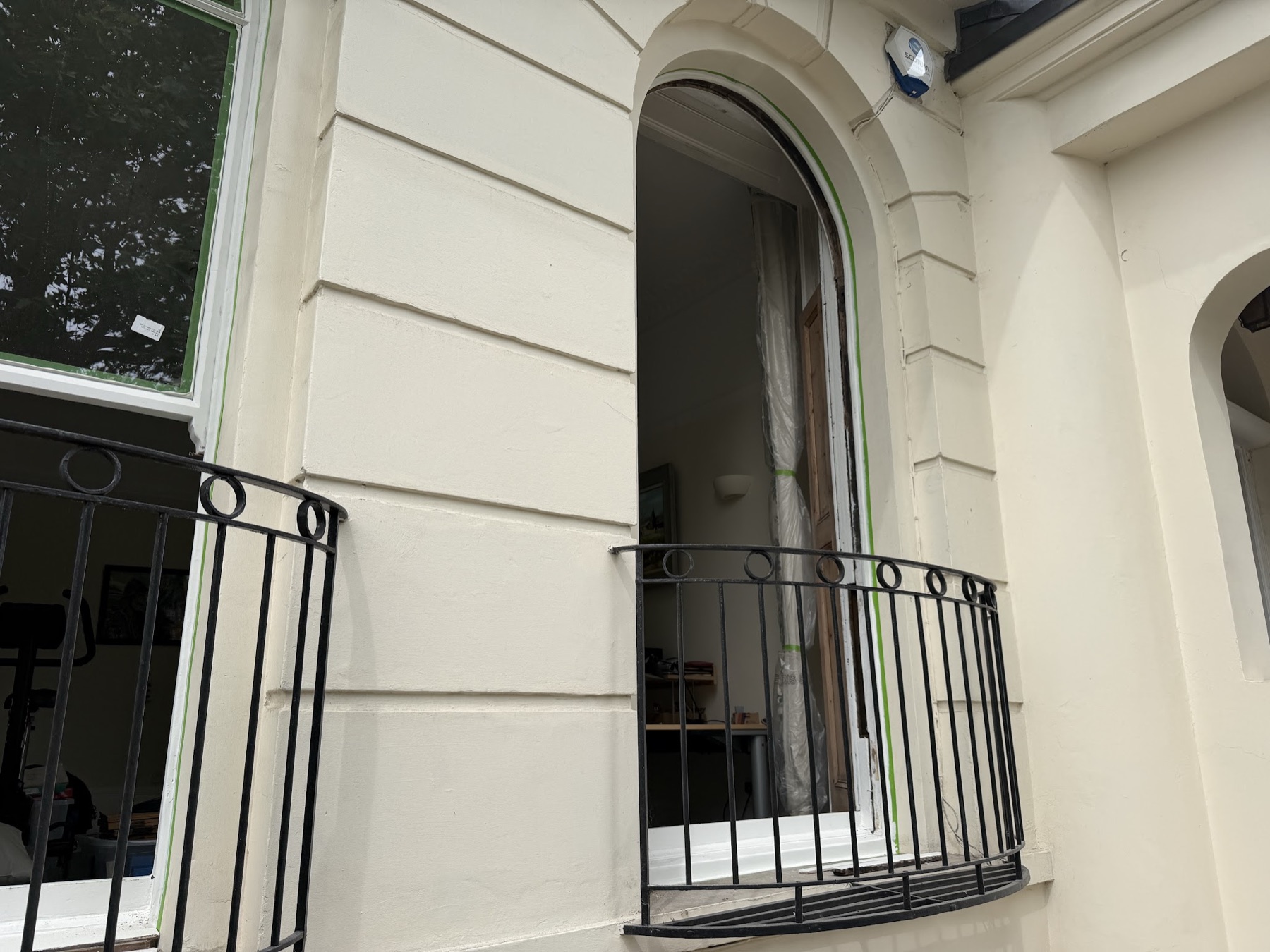
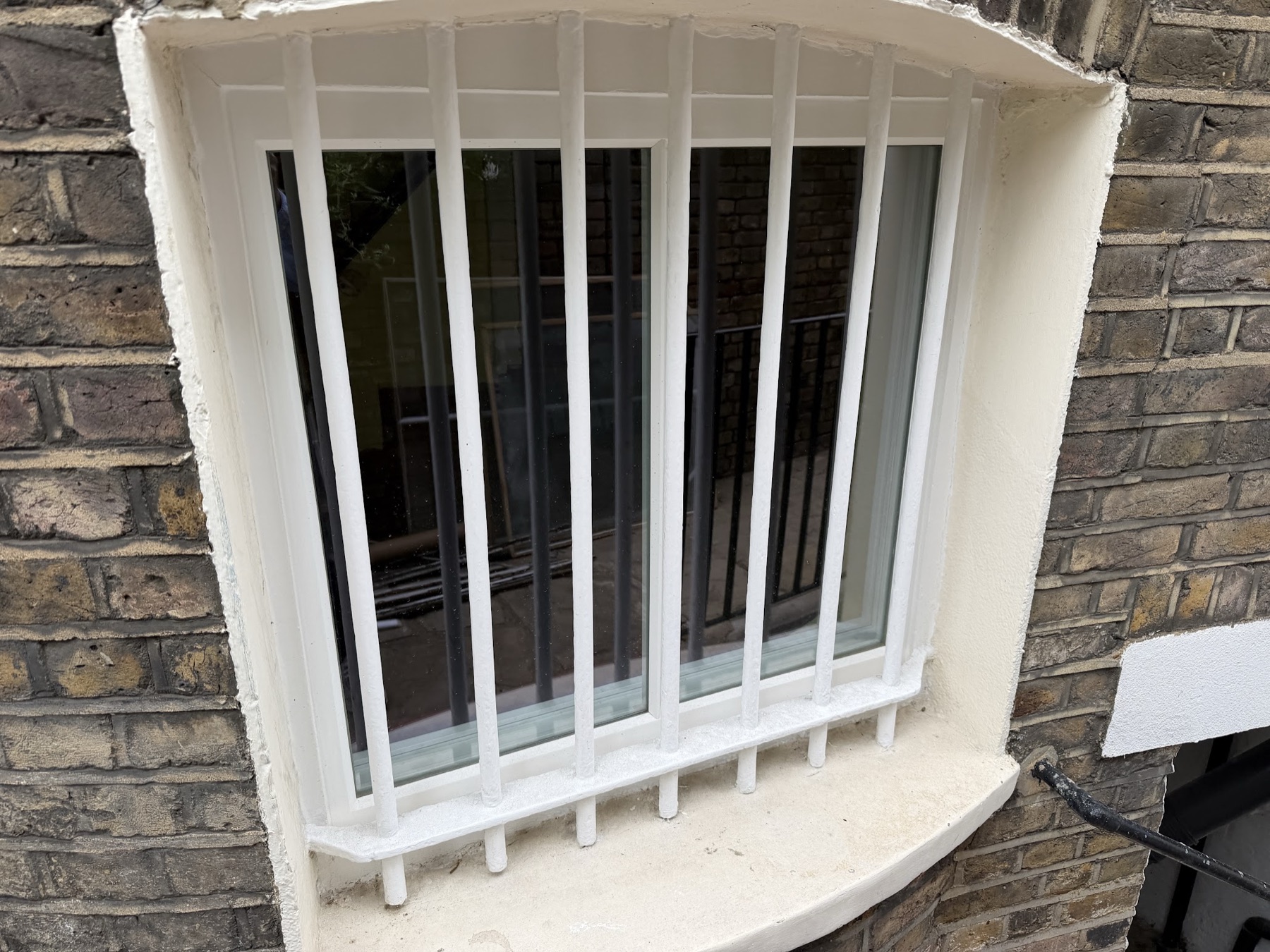
The stucco ground floor has arched windows and an arched doorway. On the side, the curved bay carries curved sashes on two floors, and a small lower-ground window sits behind painted security bars.
Curved sash windows on the bay
A curved sash window is the hardest thing on a period house to reglaze, and the reason so many of them stay single glazed. The sash follows the curve of the bay, it has to carry a unit heavier than the pane it replaces, and vacuum units are only made flat.
We measured the curve at the survey and glazed each sash in three straight LandVac units instead of one.
Each strip is narrow enough to sit flat, and set side by side across the sash they step around the curve, so the run of glass follows the bay.
Arched windows
The arched units were made to the shape of each head rather than squared off, so the curve of the brick arch and the curve of the glass still agree. The glazing bars all stayed.
Where a bar or a rail had softened, the timber was cut back to sound wood and spliced with Accoya or Tricoya before the new glass went in, glued and cramped so the mouldings run unbroken. A
rched openings are work we know well: see double glazing for arched windows and our Gothic and arched windows page.
Why Vacuum insulated glazing units on a listed house
VIG units are 8-10mm thick, so they sit in a rebate machined only a little deeper than the original, with the original sash preserved.
They reach a centre-pane U-value comparable to modern triple glazing, in a pane thin enough for a listed sash to carry, and they can be finished in putty where the manufacturer allows, as these sashes were originally.
That is what lets a listed elevation take double glazing without anything visible changing. The full method is on our double glazing retrofit for original sash windows page, and the product itself is explained under vacuum double glazing.
Timber, priming and decoration
Every sash was checked at the joints, the bottom rails and the lower boxes, where rot in a timber frame starts.
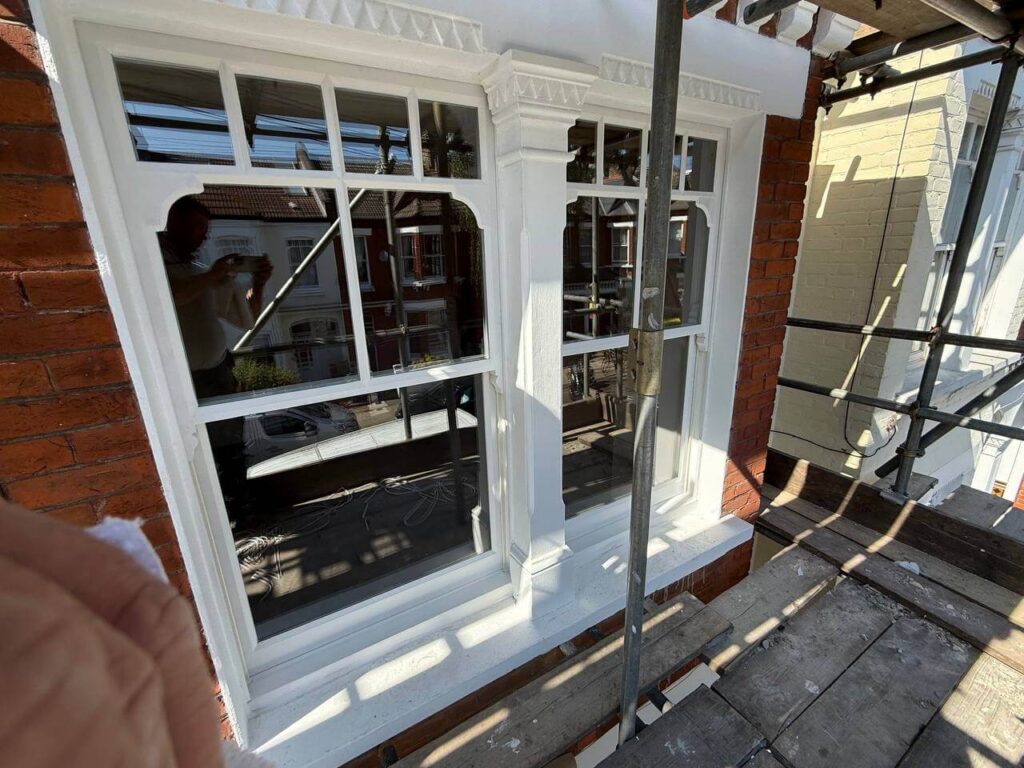
Repaired and exposed timber was primed. On this project the exterior decoration was also carried out once the joinery was primed, so the listed elevations went back in one programme. The photographs were taken during that stage, with masking tape still on some of the frames.
The result
The arched sashes run in their boxes again on new cords, the curved bay keeps its curve in glass as well as brick, and the small barred window at the lower ground carries a vacuum unit like everything above it.
From the street the villa looks as it always has. Inside, the rooms hold their heat. It joins our other London work in Regent’s Park and on Clifton Gardens in Maida Vale.
Our recent projects
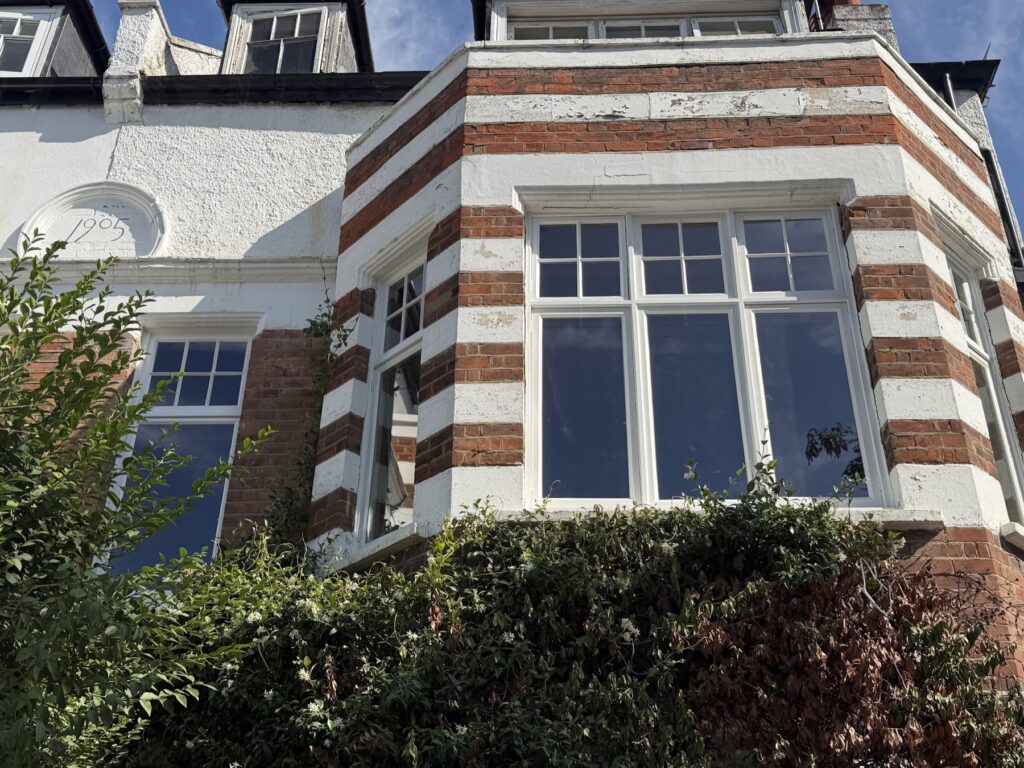
Sash window reglazing and repair in Chiswick: two Edwardian casement bays and the rear sashes, W4
Curved sash windows reglazed on a Grade 2 listed house in St John’s Wood, London NW8
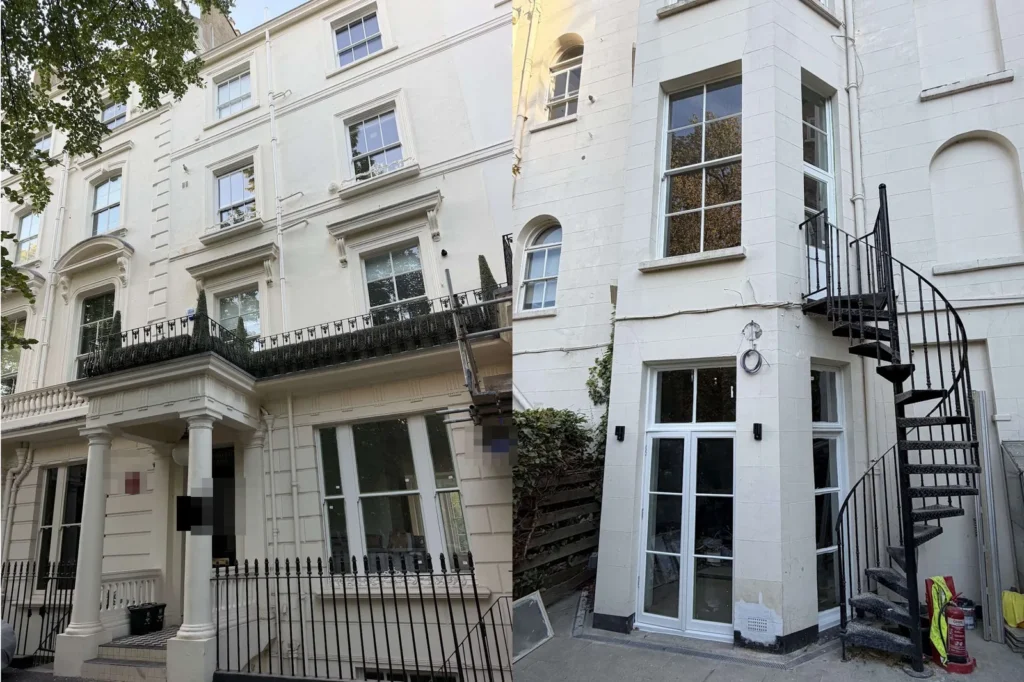
Sash window restoration and reglazing on Clifton Gardens, London W9
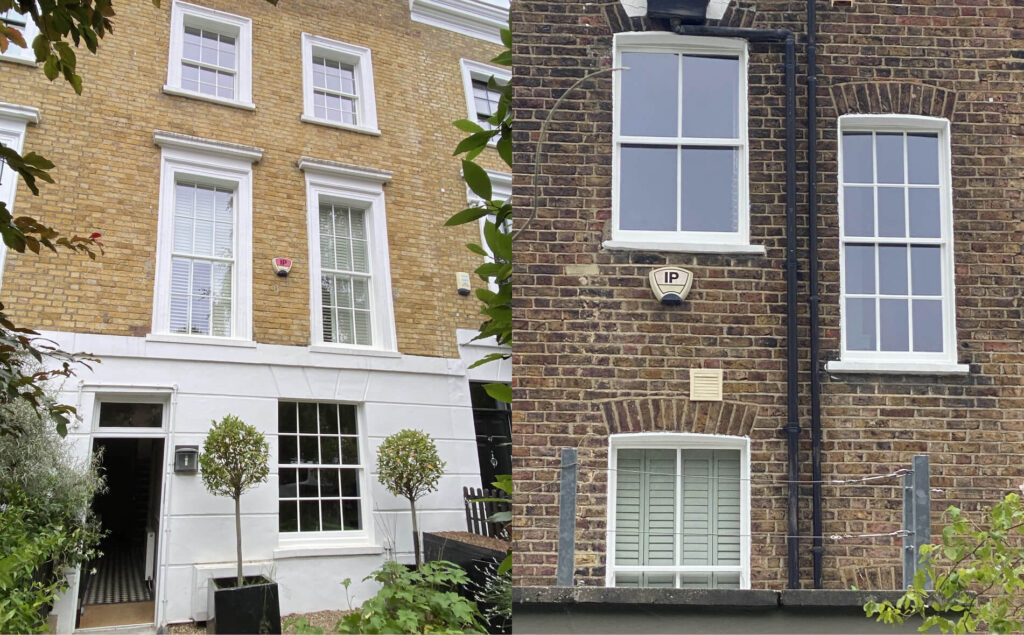
Sash Window Refurbishment & Double Glazing Regent’s Park
Edwardian sash windows reglazing