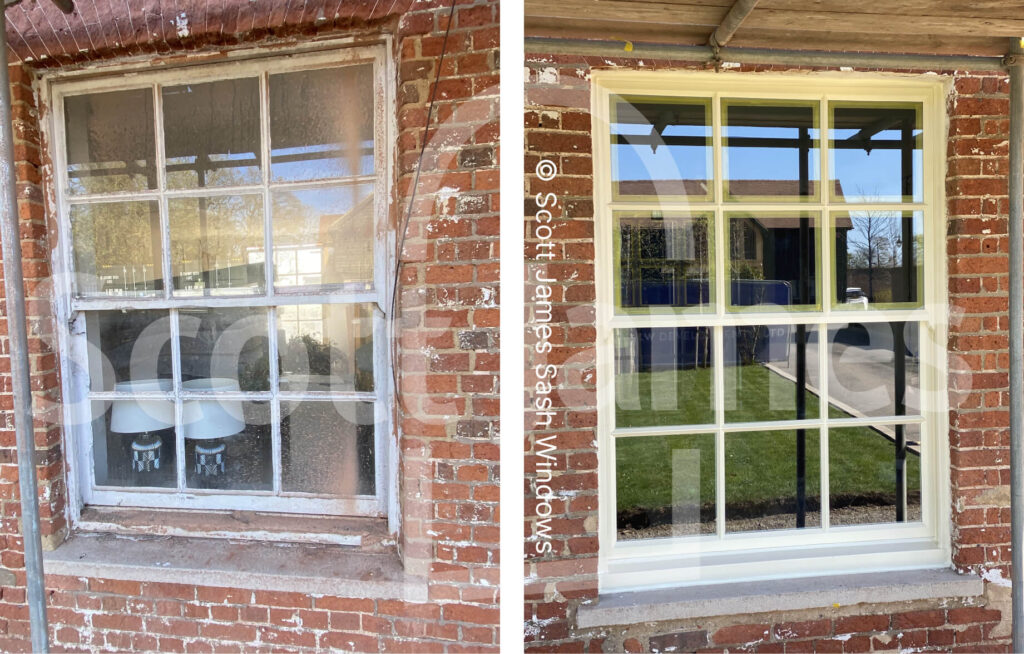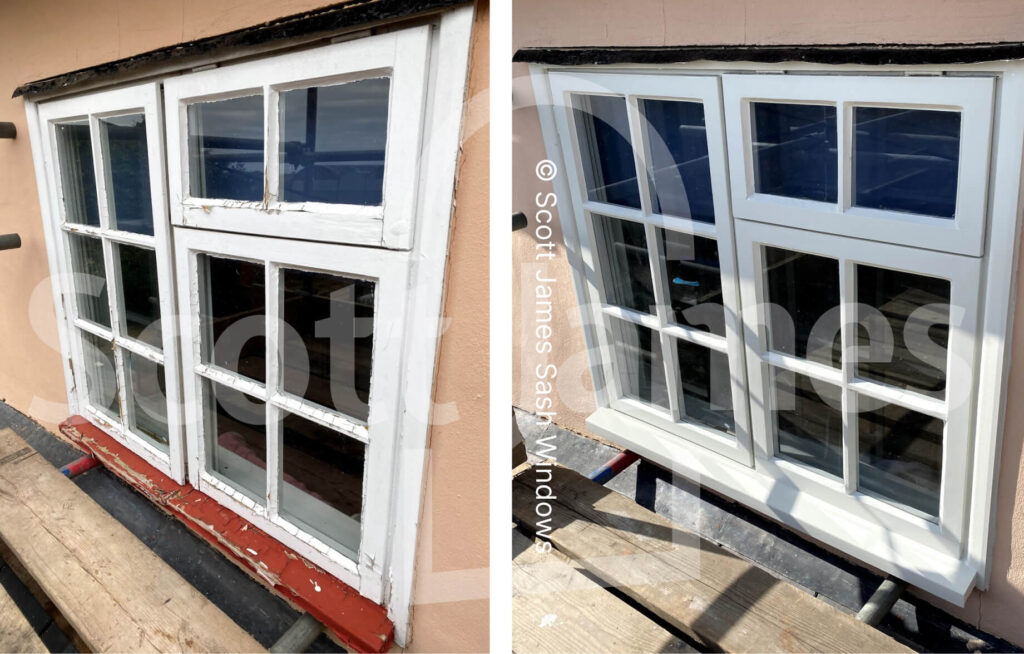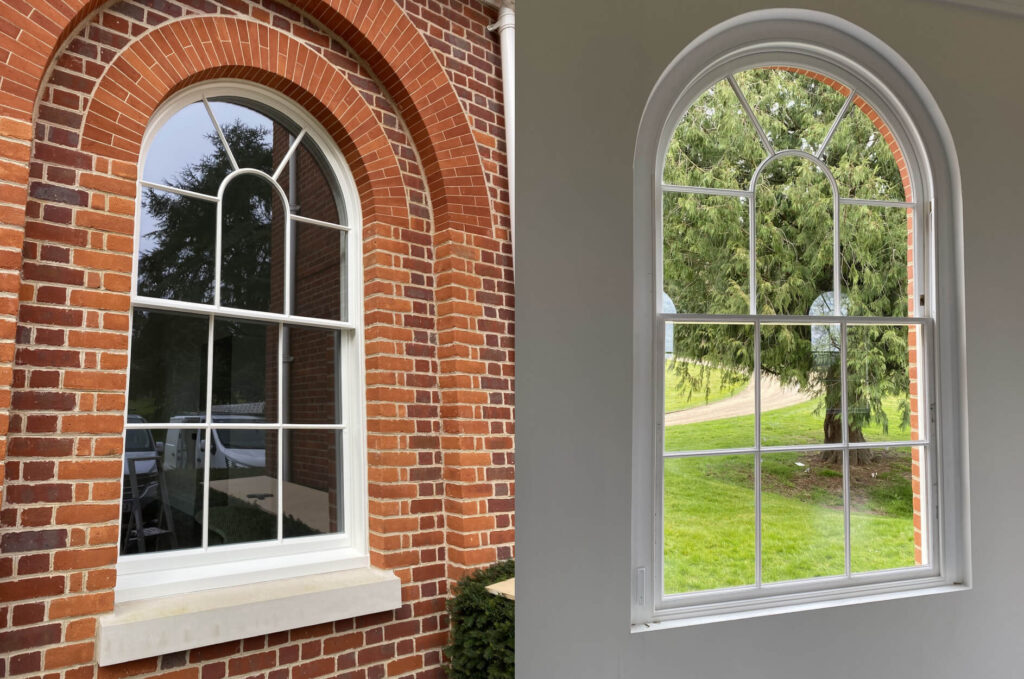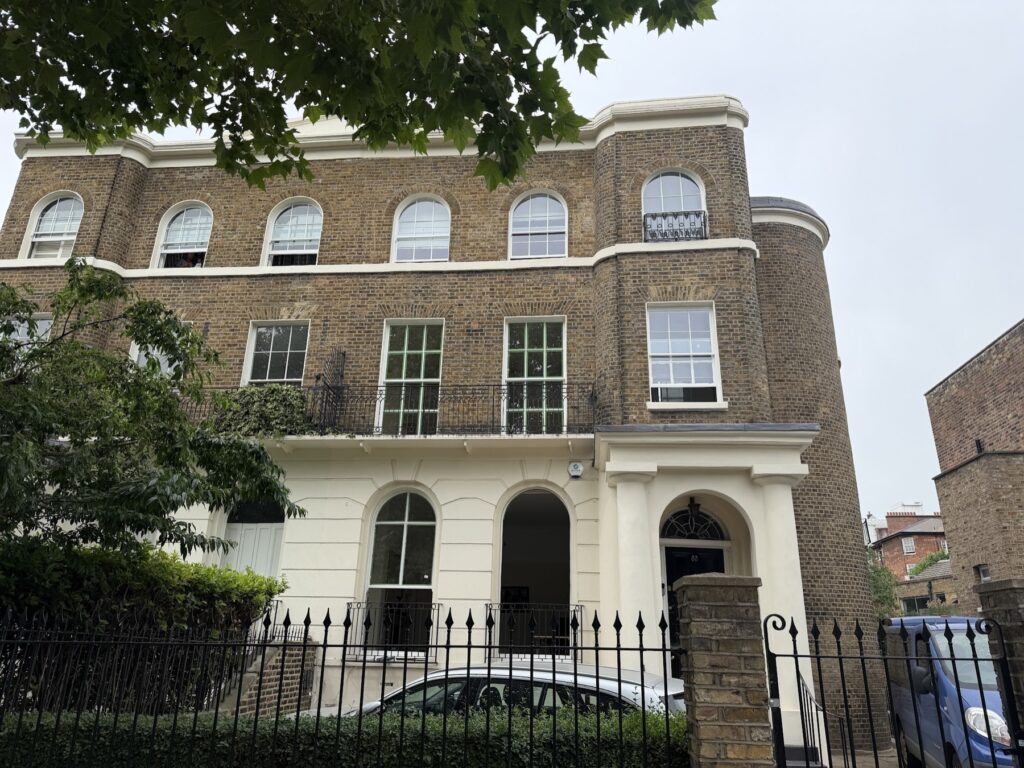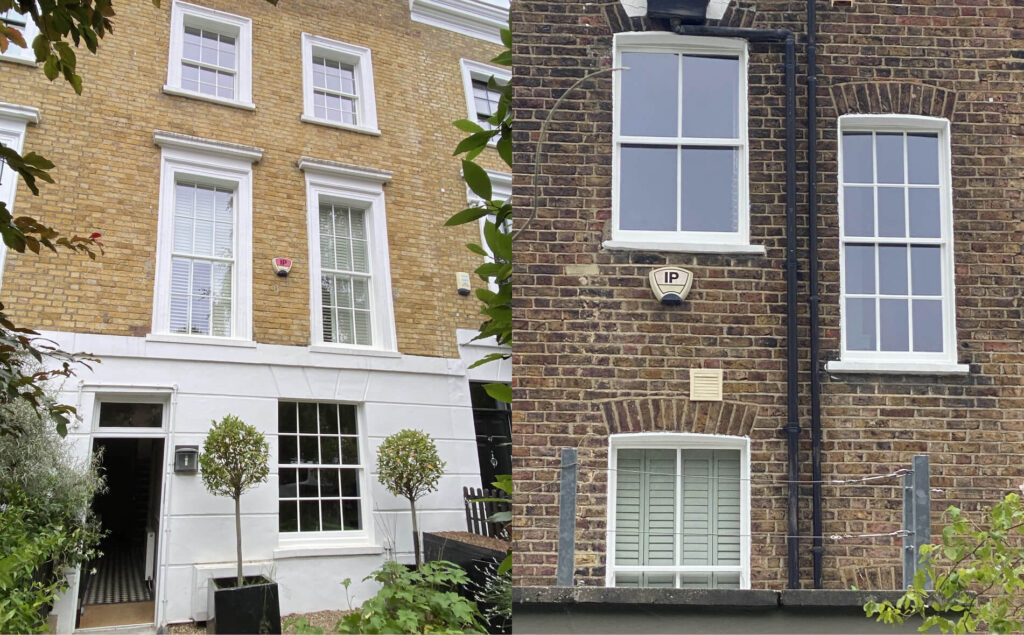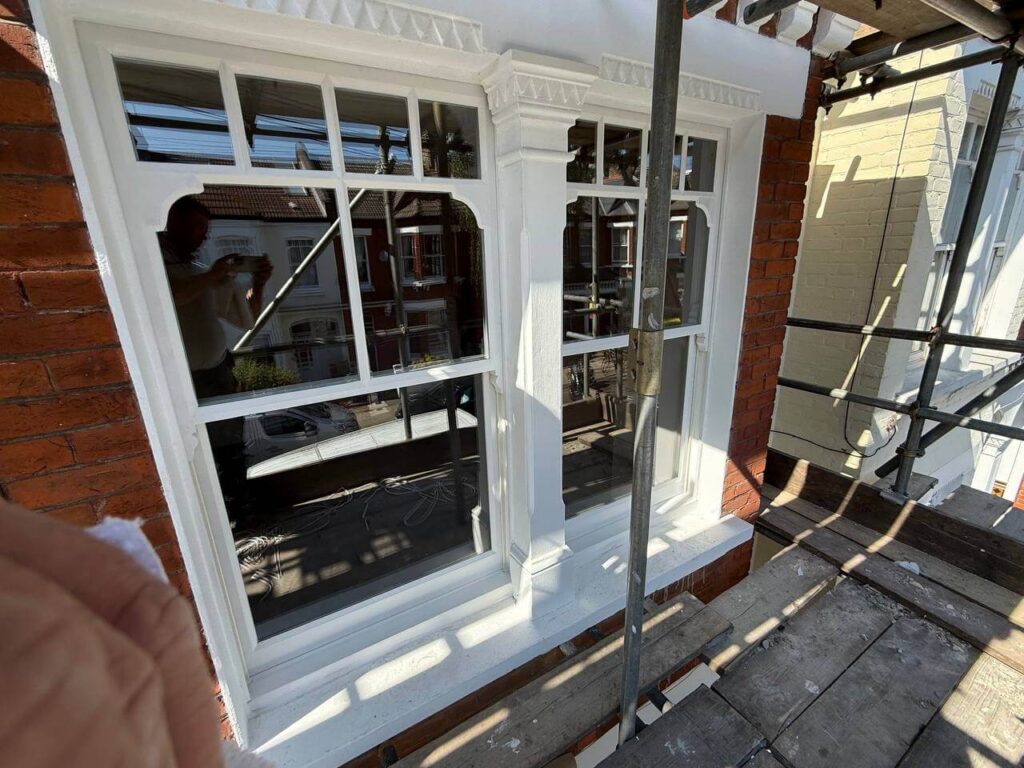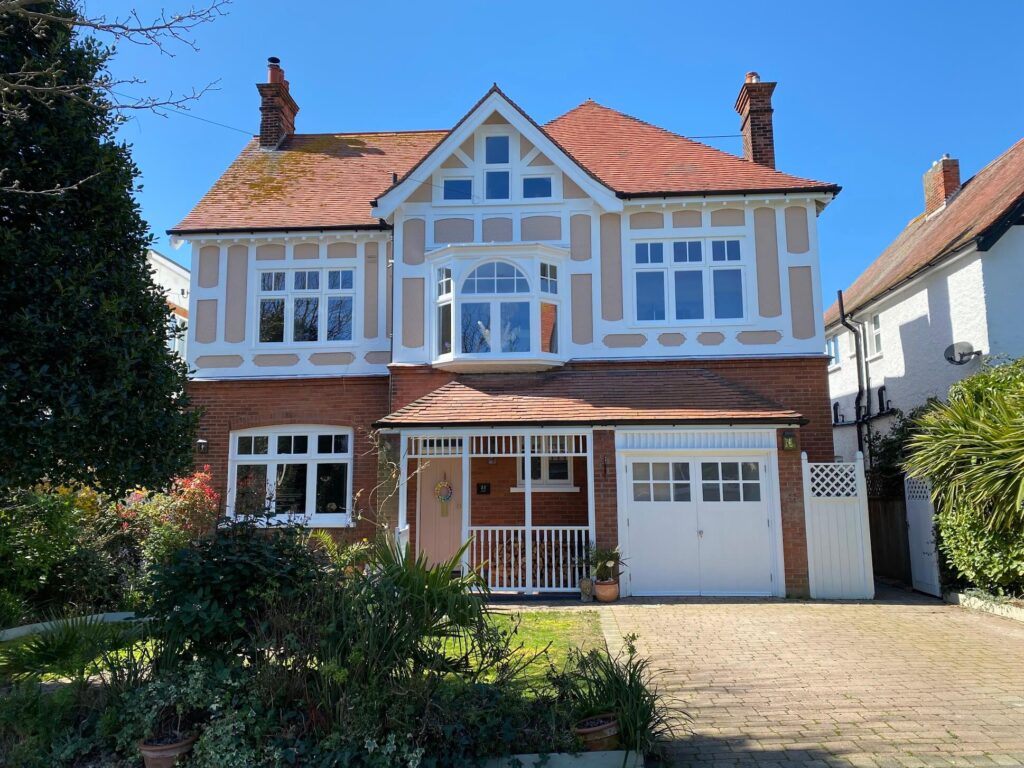





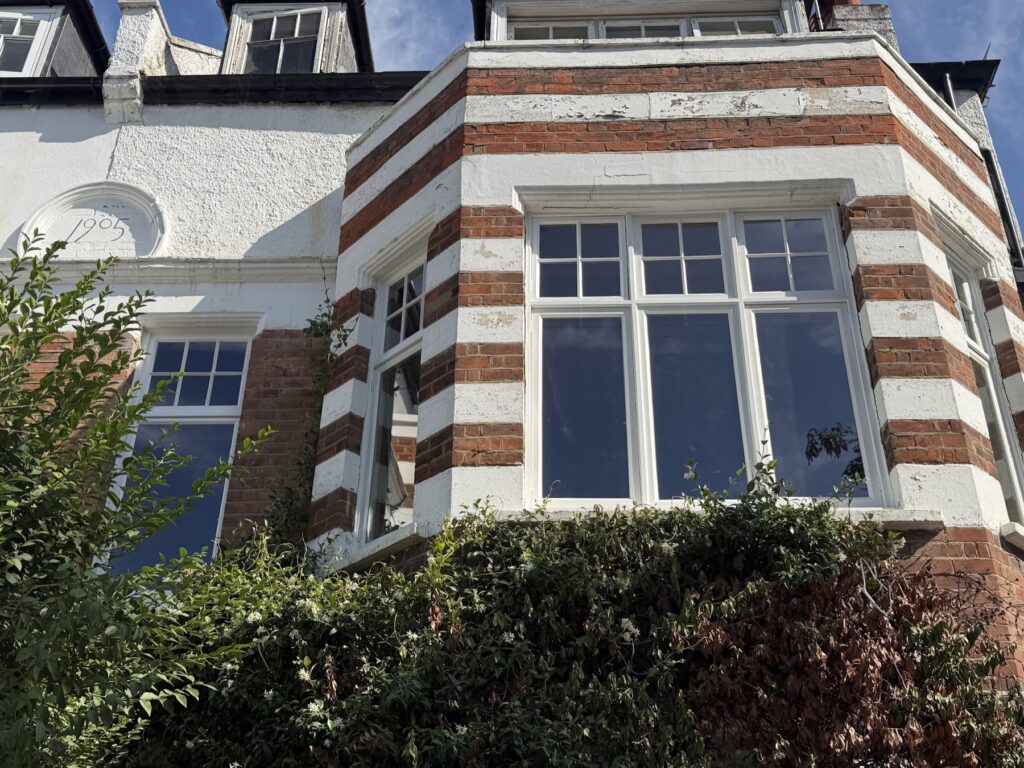
Sash window reglazing and repair in Chiswick: two Edwardian casement bays and the rear sashes, W4
15 Sep
Cold, rattling, painted-shut sash windows in a London period home?
You don’t have to replace them.
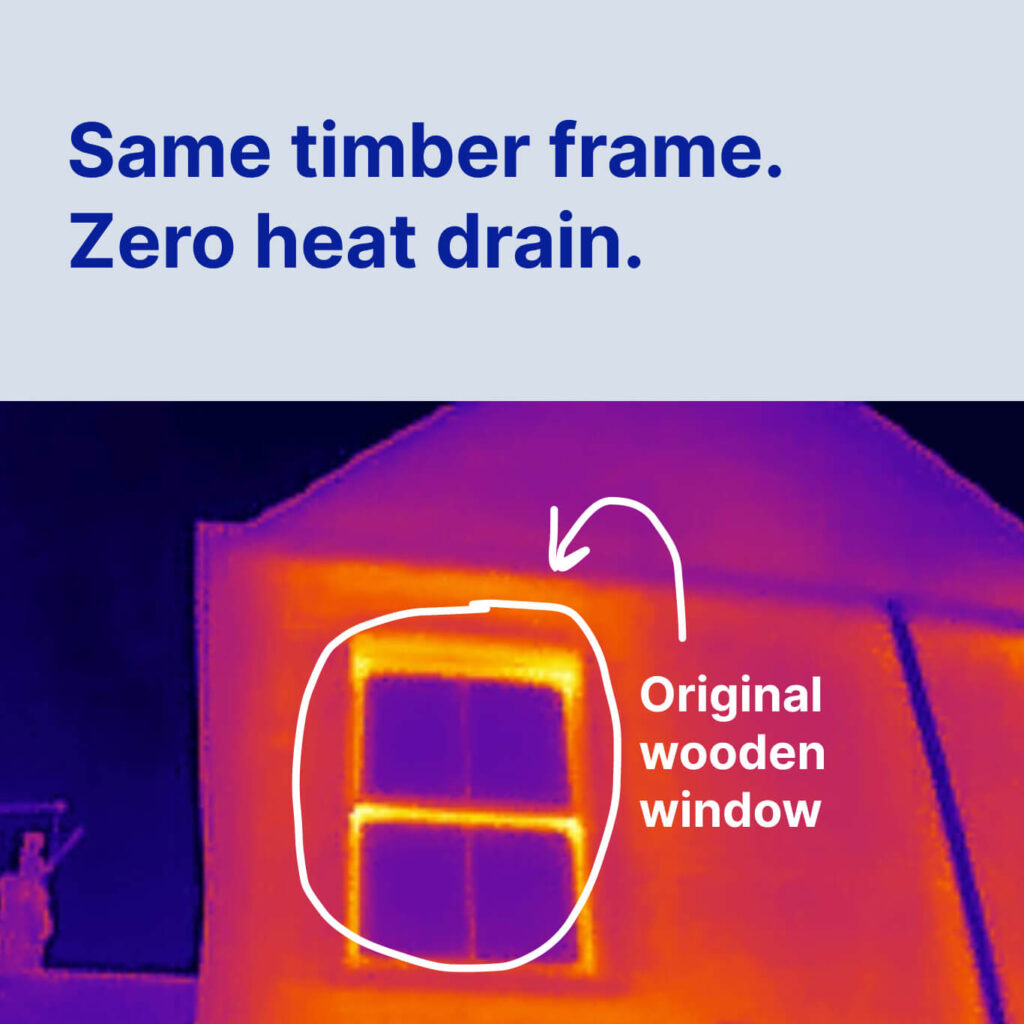
We restore the windows you already have and reglaze them with ultra-thin vacuum glass, so they hold heat like new windows while the front of your house looks exactly as it always has.
Sash window repairs London homeowners can rely on, across Greater London from Richmond and Wimbledon to Maida Vale and Regent’s Park.
Most London enquiries arrive as one complaint: the windows are cold, or they rattle, or they no longer open.
Underneath, it’s the same handful of faults, and we deal with all of them in one programme rather than window by window over several years.
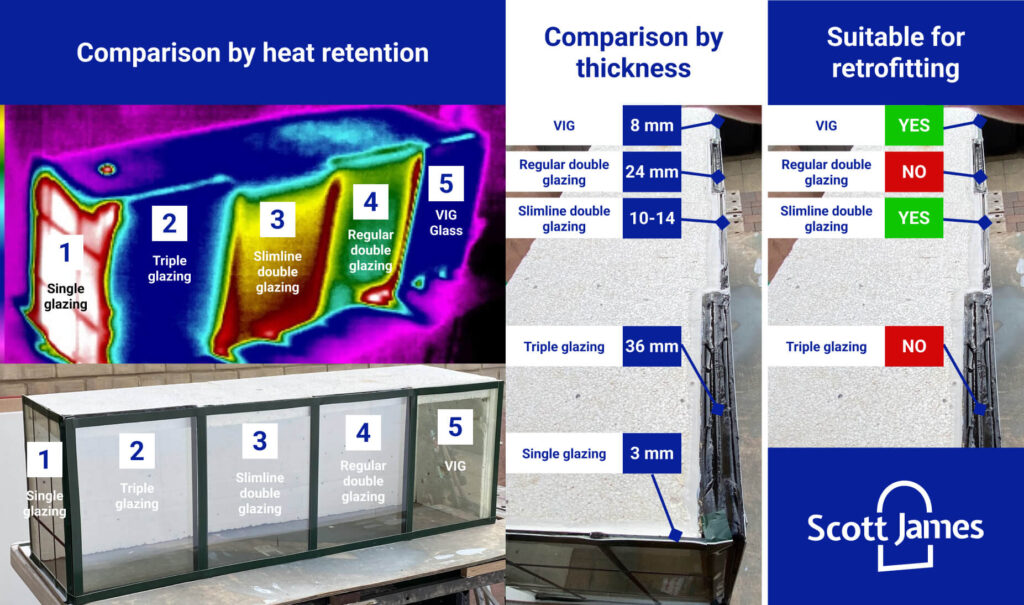
The glass is where the argument is won. A vacuum insulated unit is around 8mm thick.
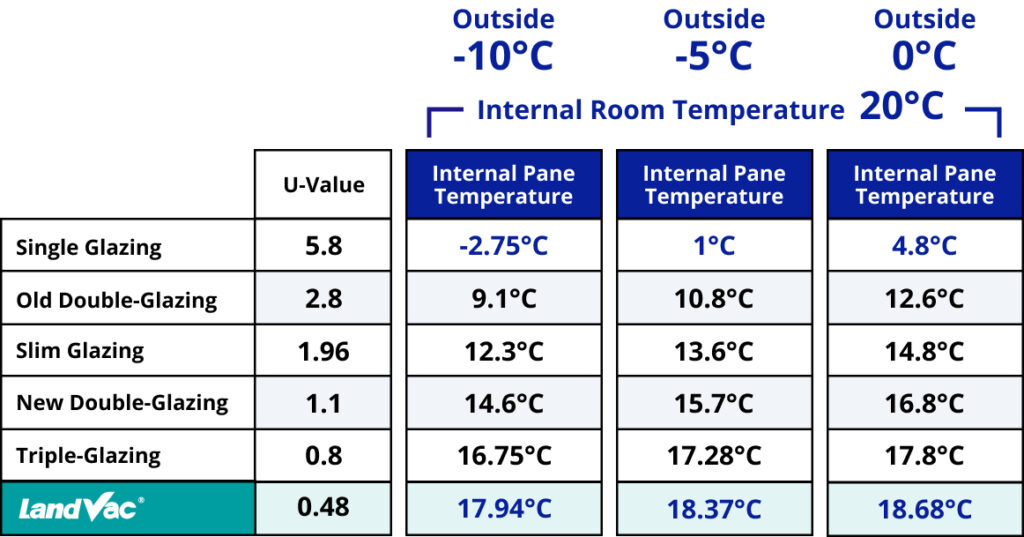
We machine the glazing rebate in your existing sash deeper to take it, so the sash that goes back into the opening is the one that was always there, and the unit reaches a centre-pane U-value in the same territory as a modern triple-glazed unit, in a Victorian sash.
That is the whole point of the technology: performance that used to need a thick sealed unit, in a pane your original sash can carry.
The full method is on our double glazing retrofit for original sash windows page, and the glazing comparison sets vacuum, slimline and secondary glazing side by side.
A vacuum unit weighs about twice the single pane it replaces, so every sash is rebalanced with added pocket weight and new cords before it goes back.
Skipping that is the most common failure in retrofit reglazing, and it’s the reason we won’t fit glass into a sash we haven’t overhauled.
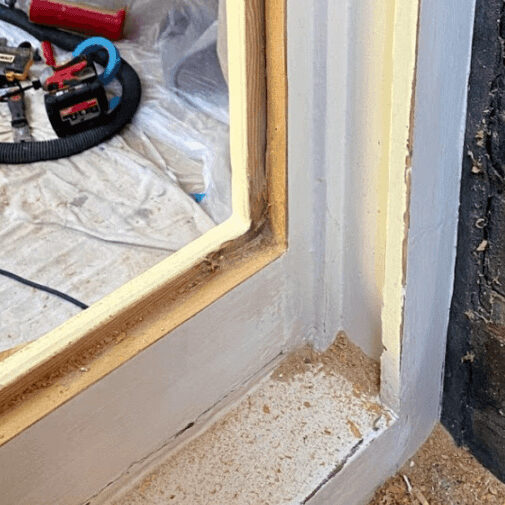
We check every sash with a blade at the joints, the bottom rails and the lower boxes, where a rotten window frame starts.
Where timber has gone we cut back to sound wood and splice in Accoya or Tricoya, glued and cramped rather than screwed, so the mouldings run unbroken.
Sills past saving are replaced outright.
The same team restores casement windows, period front doors and Gothic and arched windows, because anything with a timber frame and glass has the same problems and the same fixes.
We prime the timber we have exposed or replaced. We don’t paint: decoration is for your decorator, and the primed surface is exactly where a decorator wants to start.
A sash that won’t open is nearly always a sash that has been painted into its beads and left on cords that gave up years ago.
As part of every restoration we free the sashes, replace the cords, service or replace the pulleys and reset the counterbalance, so the window stops at any height you leave it.
Frames that have swollen or bent are eased and refitted rather than forced.
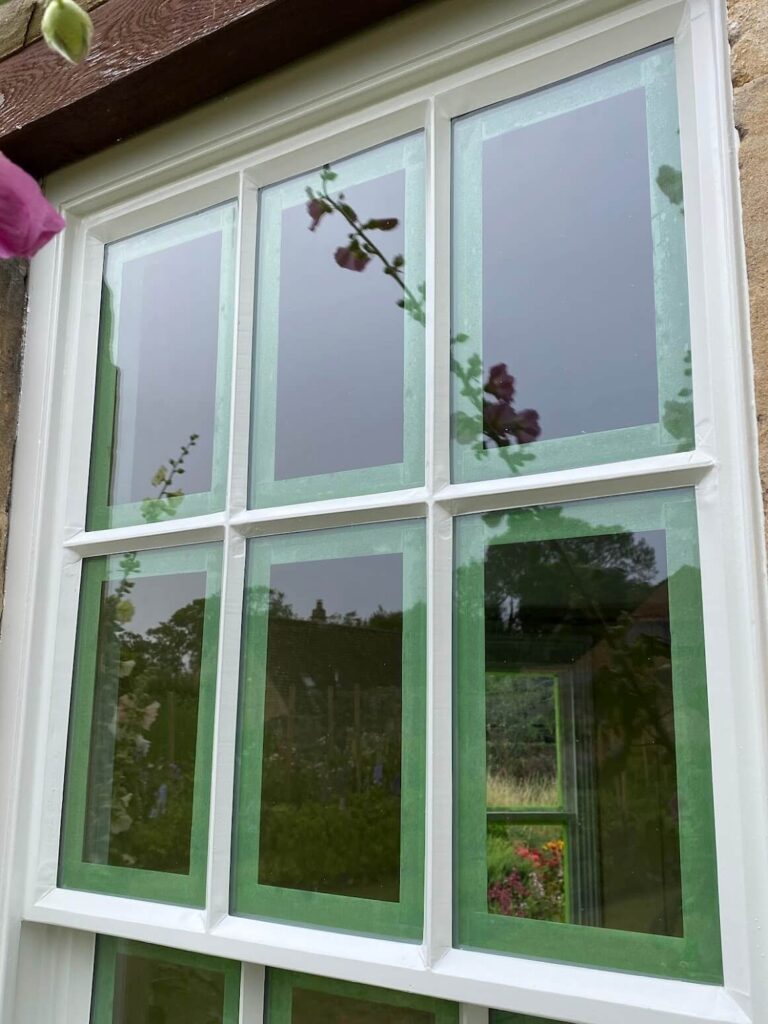
Draught proofing on our jobs is never a stick-on strip.
New staff beads and parting beads carrying a pre-installed brush pile go in, primed and fitted, so the seal is part of the window rather than stuck to it.
Because the seals sit in new, replaceable beads instead of channels routed into your century-old sashes, the system copes with boxes that have gone slightly out of true, which after a century most have.
Close the window and you can’t see a single seal.
Draughty and rattling are one problem wearing two hats, and this fixes both. Read more about draught proofing sash windows and about quieter rooms.
Why are London sash windows so cold in the first place?
A sliding sash has to have clearance to move, and after a century that clearance has grown.
Around the perimeter of two sashes it adds up to the equivalent of a permanent gap the width of a coin.
Historic England put it plainly: about one-fifth of a home’s heating goes out through the windows, and most of that escapes through the air gaps rather than through the glass.
London weather does the rest. Timber shrinks, beads wear, putty perishes, sills soften under old gloss.
The same loose channels that let the cold in let the sashes knock about in the wind, which is the rattle you hear at night. Close the gaps and you fix both.
There are three ways out of it, and only one of them keeps your windows:
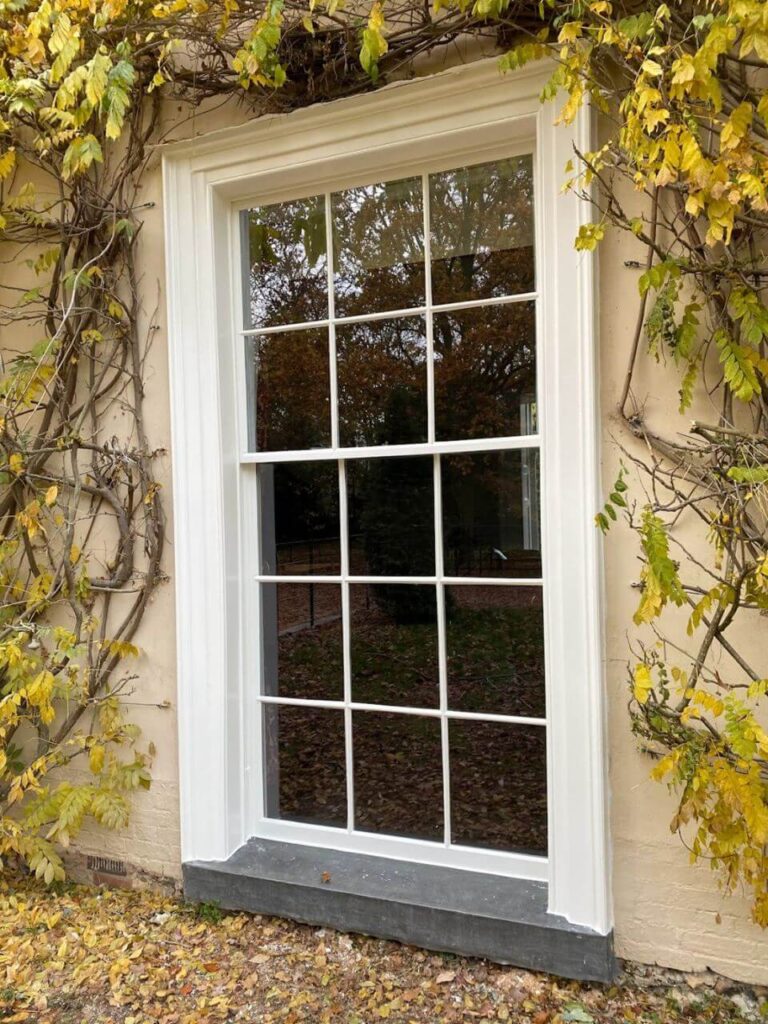
Usually not for this work. Repairing and like-for-like reglazing of existing windows is generally not development, so no application is normally needed, conservation area or not.
Replacement is different: where an Article 4 Direction applies, the permitted development right to change your windows has been withdrawn and permission is required.
Our conservation area windows guide covers the detail, and working with conservation officers explains how those conversations tend to go.
Listed buildings are a separate regime.
Listed building consent covers alterations affecting character, inside and out, and reglazing a listed sash is granted in many cases and refused in others.
It depends on the officer, the building and the significance of the glass already in it.
Our listed building windows page sets out the approach, and where consent isn’t forthcoming, listed building secondary glazing is the alternative we would recommend.
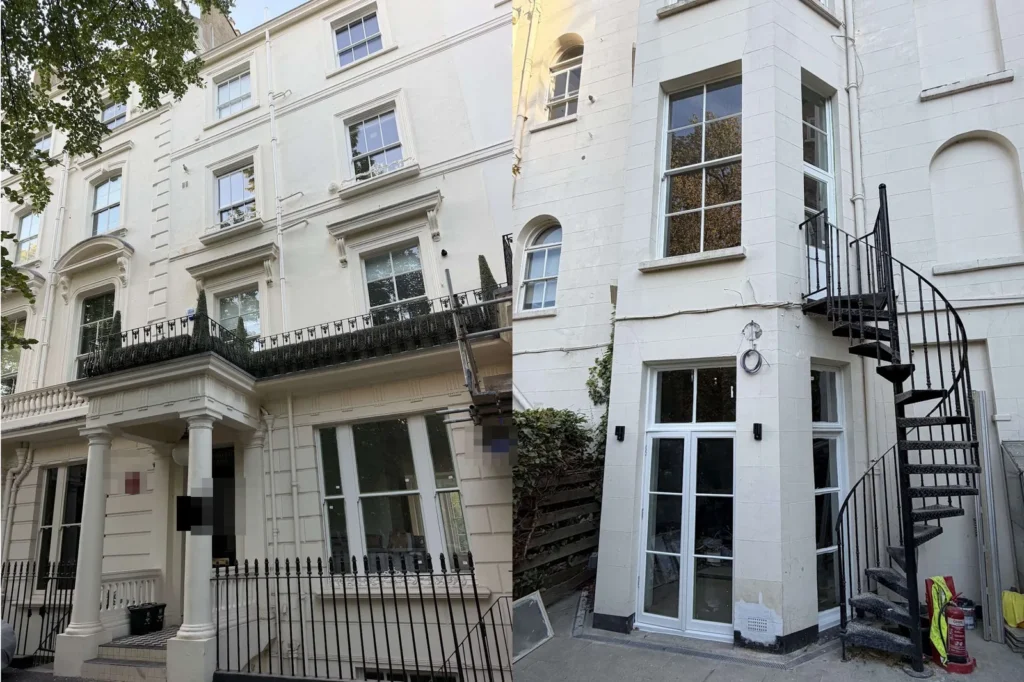
All timber frame issues are addressed during the reglazing process. The process involves rebalancing sashes and installing new sash cords while replacing putty and repairing rot and fitting new locks.
The final product consists of original windows that display a brand-new appearance while housing the most advanced glazing technology available in the market today.